



 4751
 0
 0

The flow of investment in Turkish apartments and houses is rapidly increasing. In 2025, the number of home sales rose by 14.3% to a record 1,688,910 (TÜİK), signalling a market revival after a prolonged slowdown. Many investors are once again focusing on local real estate, motivated by ongoing infrastructure development and consistently high tourist numbers (63.9 million visitors arrived in the country in 2025, including about 52.7 million foreigners). Buyers are finalising deals in popular coastal regions, as experts forecast price growth (in Alanya, for instance, the expected annual rise is 5 to 10% through 2030; this is a forecast, not a guarantee).
Government programmes, including the option to obtain residency through investments in Turkish apartments starting from USD 200,000 at the TAPU price, further stimulate demand and strengthen the country’s position in the global market. The combination of economic growth (with GDP increasing by 3.6% in 2025) and long-term capital preservation prospects makes residential property, particularly the apartment sector, one of the most attractive options for both private and institutional investors. At the same time, foreigners bought 21,534 homes in 2025, 9.4% fewer than a year earlier.
Contents:
- Property prices in Turkey
- How to purchase investment apartments in Turkey wisely
- Expenses when purchasing property in Turkey
- Property maintenance expenses in Turkey
- Advantages of investing in Turkish apartments
- Who investing in apartments may not suit
- Frequently asked questions
Property prices in Turkey
Several key factors shape real estate prices:
- Region and neighbourhood prestige.
- Layout and total area.
- Quality of finishings and construction.
- Development level of the complex’s infrastructure.
- Distance from the sea and tourist zones.
Here’s what we know about apartment prices in Turkey for 2026 (Endeksa data for September 2026, converted at the Central Bank of Turkey rate USD 1 = TL 49.18):
| City | Average apartment price, TL | Approx. USD | Price per m², TL | Annual change |
|---|---|---|---|---|
| Istanbul | 7.43 million | 151,000 | 67,512 | +28.6% |
| Antalya Province | 5.74 million | 117,000 | 54,627 | +23.7% |
| Ankara | 4.95 million | 101,000 | 39,600 | +27.6% |
| Bursa | 4.49 million | 91,000 | 35,903 | +21.2% |
| Mersin | 4.46 million | 91,000 | 35,644 | +19.6% |
These are average listing prices, including resale homes; apartments in new complexes with pools and security usually cost more.
- Istanbul is considered one of the top destinations in the property market owing to its high rental yields (according to Global Property Guide for Q3 2026, from 4.7% in Kadıköy to 12.2% in Esenyurt). We have explained the difference between apartments vs flats separately.
- Antalya’s coastal location, mild climate and well-developed infrastructure attract both investors and residents.
- Ankara’s apartment prices are relatively stable compared to coastal cities, making it an ideal choice for buyers focused on long-term stability or permanent residence.
- Bursa is a strategic city for investors seeking to diversify their portfolios due to a wide range of residential and commercial properties.
- Mersin offers relatively affordable prices despite its coastal location and modern amenities.
How to purchase investment apartments in Turkey wisely
When you choose apartments in Turkey for investment, location should be your primary consideration. Popular tourist spots with reliable infrastructure, easy transportation and close proximity to the sea ensure steady demand from tenants and buyers. Locations like Alanya and Gazipaşa are quickly becoming more popular, as shown by the record-breaking 1,004,377 passengers carried by Gazipaşa-Alanya Airport on domestic and international flights in 2025.
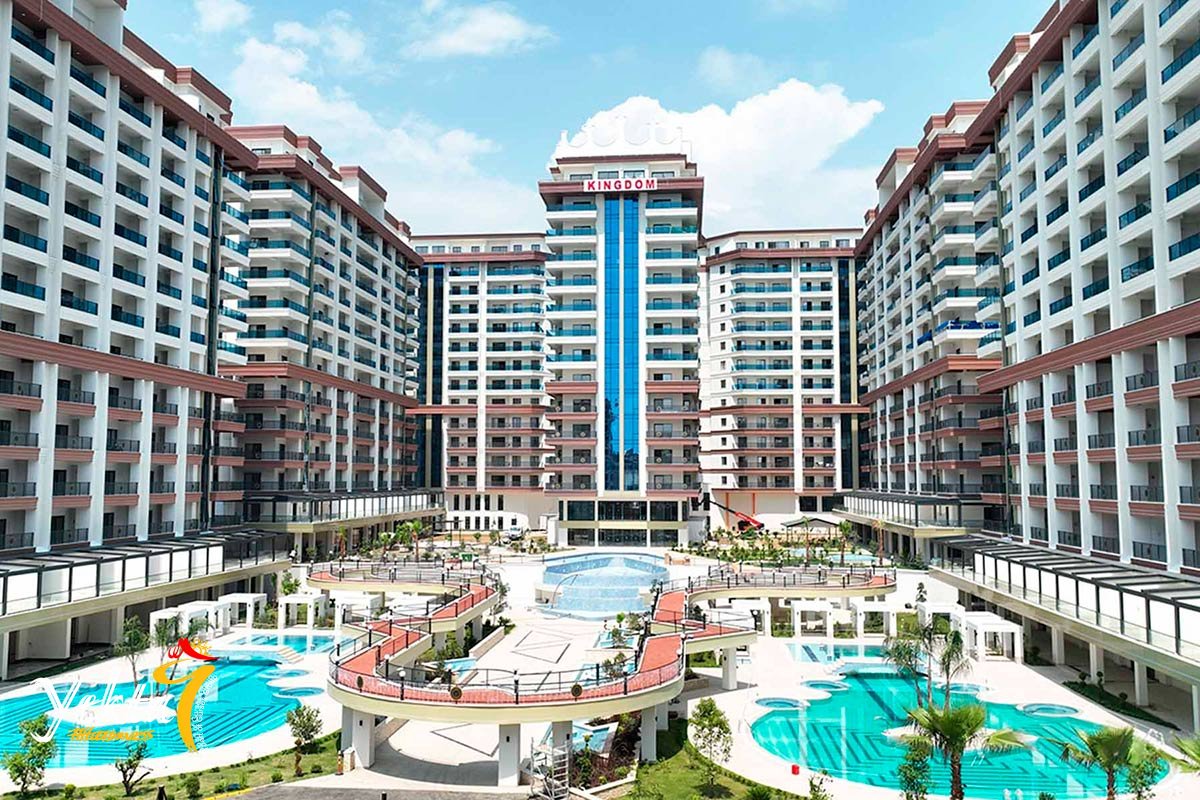
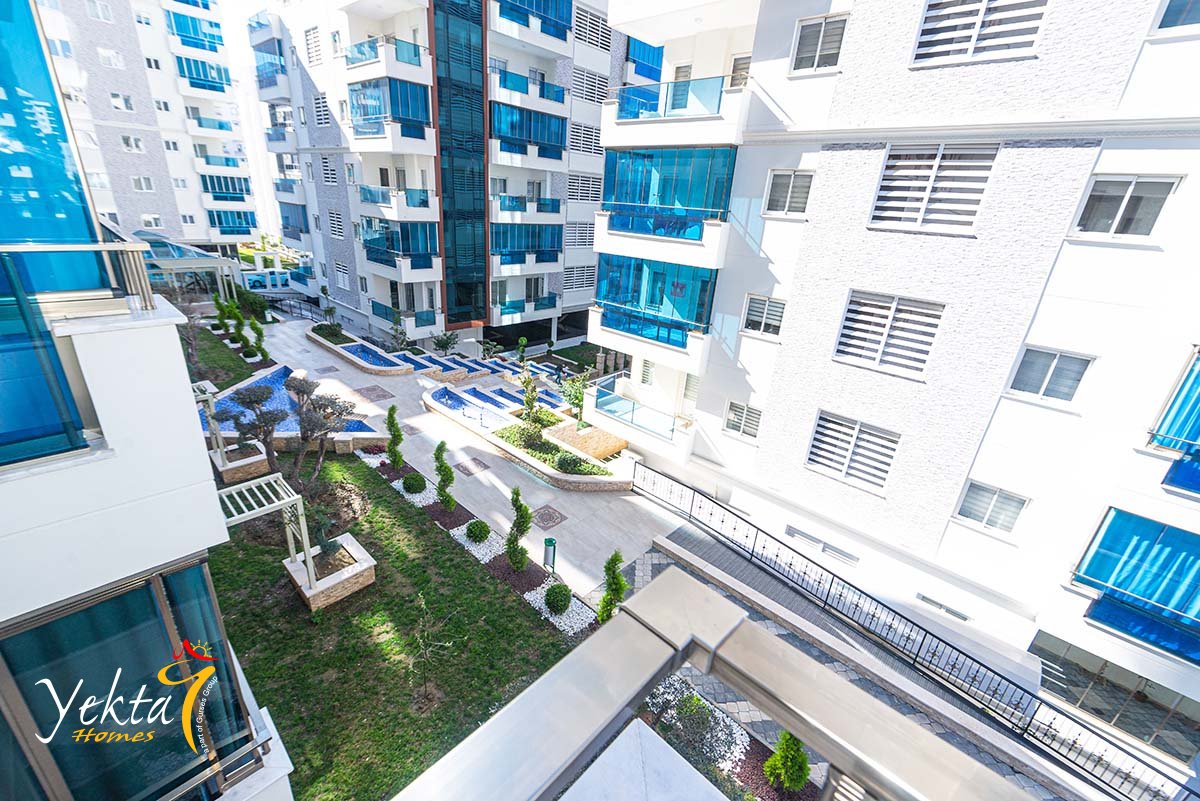
Apartments with one or two bedrooms are the most versatile. They are easier to rent out and resell. It’s important to choose properties within modern complexes that offer a wide range of amenities, such as adult and children’s pools, playgrounds, landscaped gardens, recreational areas and security services. Special attention should also be given to the stage of construction. Buying early in the construction phase allows you to purchase at a lower price and potentially secure capital growth by the time the project is completed; how much the price rises depends on the project and the market, so it is best to check the outlook with a sales manager.
Selecting a trustworthy developer is vital. Investors should assess the developer’s reputation by reviewing both ongoing and finished projects, reading customer feedback and verifying licences and documentation. For projects with 30 or more units, Law No. 6502 requires a completion guarantee, and the delivery period in the contract cannot exceed 48 months. To be confident in your decision, it’s advisable to consult a solicitor who specialises in Turkish real estate law. The solicitor can help with preparing necessary documents, reviewing the purchase agreement and ensuring that ownership is correctly registered in the Land Registry.
Expenses when purchasing property in Turkey
When you buy an apartment in Turkey for investment, you are responsible for mandatory expenses that amount to approximately 7% of the property’s value. These include:
- Title deed fee (tapu harcı) of 4% of the declared property value (not lower than the tax value; by law it is split equally with the seller, but in practice the buyer often pays all of it). This is paid at the Land Registry Office when the title is officially transferred to the buyer’s name. Plus a land registry fee (döner sermaye) of TL 20,870 (USD 424) in 2026.
- Notary fees ranging from 0.1% to 0.2%, depending on the specifics of the transaction. These may cover document certification and the issuance of a power of attorney.
- Legal fees of approximately 0.5% of the property price. This usually includes verifying the legal status of the property, preparing the sale contract and managing the transaction.
- Agency commission of up to 4% plus 20% VAT in total for both parties, with the buyer paying half by default, if the buyer works with a real estate agency. This fee covers property selection, viewing arrangements, negotiations and full transaction support.
- A valuation report from an SPK-licensed company, mandatory for foreigners; it is best to check its cost with a sales manager.
Property maintenance expenses in Turkey
| Service | Description | Typical Cost |
|---|---|---|
| Aidat (Maintenance Fee) | Monthly fee for upkeep of shared areas in the complex. Amount depends on the number of amenities and it’s set by property owners. | USD 30 to USD 100 per month (usually TL 1,500–5,000 in Alanya) |
| Electricity | Up to 240 kWh per month: about 3.24 TL (USD 0.07) per kWh including taxes. Above 240 kWh per month: roughly one and a half times more. Household tariffs rose by 25% on April 4, 2026, and above 4,000 kWh a year the state-supported tariff no longer applies. | Based on usage |
| Water | There’s no national tariff and rates are set by local authorities. For example, in Antalya Province, the ASAT tariff for June 2026 is 33.31 TL (USD 0.68) per cubic metre for up to 20 m³ a month, excluding VAT, and it is indexed monthly. | Varies by city |
| Natural Gas | Rates are tiered. Since April 2026, the BOTAŞ base price for households has been 10.625 TL (USD 0.22) per cubic metre in the first tier and 18 TL (USD 0.37) in the second, plus distribution charges and taxes that vary by city. | Varies by city |
| Communication Services | Varies by provider. In 2026, home internet at 100 Mbps costs roughly 800–950 TL (USD 16–19) a month; it is best to check the exact tariff with a provider for the apartment's address. | Based on selected services |
Every property owner in Turkey must obtain DASK, a compulsory earthquake insurance. Without a valid policy, the TAPU cannot be transferred and water and electricity cannot be connected. In the event of a natural disaster, a government-backed insurance provider compensates for damages. The policy cost is determined based on the type of building and the seismic risk of the area (usually TL 500–3,000 a year). A dedicated calculator is available on the organisation’s website. Luxury properties are taxed based on their tax value (an owner of only one property is exempt from this tax) as follows in 2026:
- From 17.71 million TL to 26.57 million TL (USD 360,000 to USD 540,000) at 0.3% of the amount above 17.71 million TL
- From 26.57 million TL to 35.43 million TL (USD 540,000 to USD 720,000) at TL 26,568 plus 0.6% of the amount above 26.57 million TL
- Over 35.43 million TL (from USD 720,000) at 79,716 TL (USD 1,621) plus 1% of the amount exceeding 35.43 million TL
Both residents and non-residents must pay income tax in Turkey on earnings such as rental income. This tax is applied progressively and allows for certain deductions and benefits. Even if the property is jointly owned by spouses, each individual is required to declare and pay tax on their share of the income separately.
| Taxable Income (2026) | Tax Rate |
|---|---|
| Up to 190,000 TL (USD 3,863) | 15% |
| 190,001 to 400,000 TL (USD 3,863 to USD 8,133) | 20% |
| 400,001 to 1,000,000 TL (USD 8,133 to USD 20,333) | 27% |
| 1,000,001 to 5.3 million TL (USD 20,333 to USD 107,767) | 35% |
| Over 5.3 million TL (over USD 107,767) | 40% |
If a property is rented out for residential purposes, a certain amount is exempt from taxation (TL 58,000 a year in 2026, about USD 1,179). Owners can choose between two tax deduction methods:
- The Actual expense method allows deducting real expenses (including utilities, administrative fees, insurance, taxes, depreciation and repair costs) from gross rental income. Additionally, 5% of the property value is deductible during the first 5 years of rental. Since 2025, interest on a housing loan is no longer deductible.
- The Lump-sum method allows landlords to deduct 15% from their gross income. Once this method is chosen, they cannot switch back to the actual expense method for 2 years.
Capital gains from property sales are exempt from income tax if the holding period exceeds five years. If sold earlier, standard income tax rates apply. The taxable gain is calculated by subtracting inflation-adjusted purchase costs from the sale price.
Owners must also pay an annual property tax, which is a municipal tax levied on the value of land and buildings. The rate depends on the property type and location:
- Residential properties: 0.1% (0.2% in major cities).
- Commercial and agricultural properties: 0.2% (0.4% in major cities).
- Land plots: 0.3% (0.6% in major cities).
In 2026, a property's tax value cannot exceed the 2025 level by more than three times.
Advantages of investing in Turkish apartments
The Turkish real estate market remains an attractive investment destination for the following factors:
- High rental yields and a developed tourism sector. Turkey consistently ranks among the world’s most popular tourist destinations. In 2025, 63.9 million visitors explored the country, and tourism revenue reached a record USD 65.2 billion, boosting the rental market. In Q3 2026, the average annual return on residential property nationwide reached 7.86% (Global Property Guide). The influx of foreigners, from vacationers at Mediterranean and Aegean resorts to medical tourists, students and digital nomads, attracts buyers interested in apartments for investment and passive income. In cities like Alanya, high demand for both short- and long-term rentals enables property owners to secure consistent rental income year-round. Short-term rentals of up to 100 days require a permit under Law No. 7464, and with a long-term rental, an apartment in Alanya pays for itself in about 20 years on average (Endeksa).
- Stable economic growth. In 2025, Turkey’s GDP increased by 3.6%. Economic growth fosters a higher standard of living, boosts domestic demand and encourages urban expansion, all of which have a positive effect on the property market. For investors, this results in reliable rental income, potential for long-term appreciation and wider opportunities to diversify portfolios through new residential and commercial developments.
- Favourable exchange rate for foreign investors. The depreciation of the Turkish lira presents opportunities for foreign investors holding capital in USD or EUR to secure more favourable deals. We have explained in more detail why people invest in Turkey in a separate article. This is especially relevant in light of recent official data from the Central Bank: in August 2026, the nationwide housing price index increased by 23% year-over-year. However, when adjusted for inflation, real prices actually declined by 6.5%. This scenario presents favourable conditions for apartment investments in Turkey for foreigners, allowing them to purchase high-quality properties at lower prices when converted into hard currency. Additionally, if the market recovers and the lira appreciates, there is potential for further capital gains through currency appreciation.
- Price growth potential in selected regions. Despite the current correction, certain parts of the country still show promise for capital growth. For example, analysts predict that the Alanya property market may experience annual price rises of 5 to 10% until 2030. This is driven by limited land availability, strong interest from overseas buyers and increasing tourism appeal. Such forecasts make Alanya and similar areas appealing to investors with medium- and long-term plans. Capital gains can also be maximised by purchasing apartments in off-plan projects in Turkey, as prices typically increase by the time ownership is transferred; how much depends on the project, so it is best to check the outlook with a sales manager.
- Increasing number of transactions. The demand for real estate in Turkey continues to increase, driven by infrastructure development and enhanced project quality. In 2025, the total number of transactions rose by 14.3%, reaching a record 1.69 million sales. This figure suggests a gradual recovery in buyer activity. A lively market reduces risks linked to resale challenges or shifts in investment strategy.
Yekta Homes - developer in Turkey, founded in 2005, with more than 20 completed projects featuring high-quality, modern housing (and 8 more under construction). Over 2,000 families have bought apartments for investment or personal use in prime locations like Alanya and Gazipaşa. On the company’s website, you can browse both completed and under-construction complexes offered at competitive prices, from EUR 103,000 in those under construction and from EUR 139,000 in completed ones according to the October 2026 catalogue. Contact our specialists to find the right property, review available instalment plans and get full support at every stage of the purchase, as well as after the sale support.
"We advise investors to calculate the yield in euros and after all costs: aidat, rental income tax, management and vacancy between tenants. That way you can see right away whether the apartment suits your goal, rental income or capital growth," says a sales manager at Yekta Homes.
Who investing in apartments may not suit
- Those expecting a quick payback. With a long-term rental in Alanya, an apartment pays for itself in about 20 years on average.
- Those counting on short-term rentals without registration. Without a permit under Law No. 7464, fines start from TL 180,617.
- Those planning to sell within 5 years. Income tax will be due on the gain.
- Those not prepared for inflation. It stood at 29.73% in September 2026, and costs in lira rise quickly.
Each of these situations is visible in advance. The solution is to calculate the yield after costs, obtain a short-term rental permit and choose a holding period that suits your strategy.
Frequently asked questions
What is the rental yield on homes in Turkey?
A national average of 7.86% gross yield in Q3 2026 (Global Property Guide). In Alanya, a long-term rental pays back in about 20 years.
How much does an apartment cost in Istanbul and Antalya?
In September 2026, about TL 7.43 million (USD 151,000) in Istanbul and TL 5.74 million (USD 117,000) in Antalya Province on average (Endeksa).
What costs are involved in buying?
About 7% of the price: the 4% title deed fee, notary, solicitor and agency commission, plus the TL 20,870 land registry fee and a valuation report.
What is the tax on rental income?
From 15% to 40% on the progressive 2026 scale. For housing, TL 58,000 a year is tax-free, and with the lump-sum method you can deduct 15% of income.


