 8881
 6
 3

Property from a developer in Turkey is a profitable option for investing and living in a country with a warm climate and a fast-growing economy. The housing market here is one of the leading sectors, along with tourism and agriculture. Below, we explain why it is worth investing in Turkish property and how to choose a suitable property for this. We have collected the general arguments for buying in our article on 15 reasons to invest in property in Turkey, and here we look at how to choose the property itself.
Contents:
- The current market situation
- Life and business in Turkey: why do foreigners choose this country?
- The main reasons to invest in Turkish property
- How to choose an investment property
- How to reduce the risks of property investment
- Who investing in Turkish property may not suit
- Frequently asked questions
- Help with buying property in Turkey
The current market situation
To better understand the current situation on the Turkish property market, you need to look at the statistics.
According to the Turkish Statistical Institute (TurkStat), 127,410 properties were sold in August 2026. Compared with the same period of the previous year, the number of transactions fell by 14.7%. The cities with the highest buyer demand were:
- Istanbul: 20,426 properties sold (16.0% of all transactions);
- Ankara: about 10,800 properties sold (8.5%);
- Izmir: about 6,500 (5.1%).
Sales of properties bought with a mortgage in August 2026 rose by 7.2% compared with the same month of the previous year, to 22,131 properties. Mortgaged properties accounted for 17.4% of all transactions. From January to August 2026, the number of mortgage deals rose by 27.6%.
In August this year, 105,279 other properties were sold (without a mortgage), about 18% fewer than last year. These sales accounted for 82.6% of all property sold. From January to August, 950,529 properties were bought, 6.8% fewer than in the same period of the previous year. At the same time, 2025 was a record year: 1,688,910 properties were sold over the year, 14.3% more than in 2024.
The new-build sector declined less than the market as a whole. In August 2026, 44,378 transactions were registered, 4.5% fewer than last year. Thus, sales of new homes accounted for 34.8% of all properties sold in Turkey in the month.
The resale sector recorded 83,032 sales. In August 2026, the figure fell by 19.4% compared with the same month of the previous year.
According to the report, in August the number of properties bought by foreign investors was almost unchanged (+0.1%) compared with the same month of the previous year, at 1,938, accounting for 1.5% of all properties sold. For 2025 as a whole, foreigners were most keen to buy in the following cities:
- Istanbul: 7,989 sales;
- Antalya: 7,118;
- Mersin: 1,800; Ankara: 769.
In total, foreigners bought 21,534 properties in 2025, 9.4% fewer than a year earlier, and 13,141 from January to August 2026 (−6.3%).
Life and business in Turkey: why do foreigners choose this country?
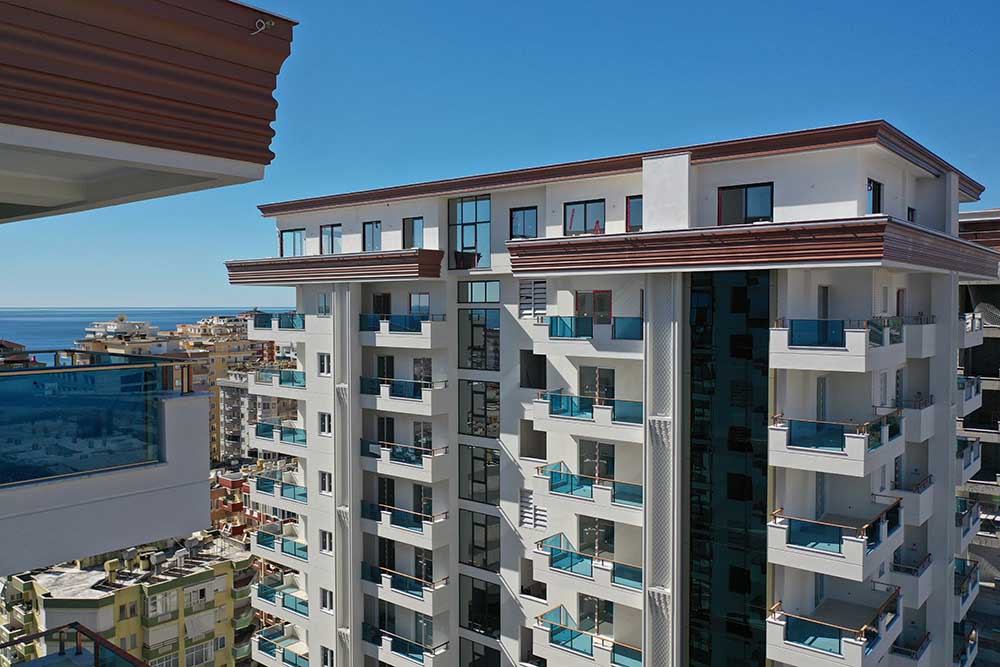
Over the past two decades, Turkey has managed to expand its profile from a classic tourist destination to an attractive investment destination. Property, which has gained international popularity thanks to affordable prices and a wide range of offers, has played an important role in this.
Modern investors buy Turkish homes to profit from investment in Turkey by renting the property out or reselling it.
According to Forbes, the most popular destinations for international investors are:
- Istanbul;
- Antalya;
- Alanya.
TurkStat, mentioned above, also puts Istanbul and Antalya at the top for purchases by foreigners, and Alanya is part of Antalya Province.
The main reasons to invest in Turkish property
The Turkish economy
The Turkish government is committed to liberalizing economic and political institutions and to creating a stable and growing base. For more than 20 years, the Turkish economy has been undergoing a successful transformation.
According to TurkStat, in the second quarter of 2026 the country's economy grew by 2.3% year on year and by 1.1% compared with the previous quarter, and by 2.5% in the first half of 2026. Inflation, however, remains high: 29.73% year on year in September 2026.
Rewards for investment
Turkey offers advantages to both Turkish and international individuals and legal entities investing in the country's economy. The general investment incentives are the same for Turkish and foreign investors. Financial, economic and tax incentives are provided to reduce the cost of investment. For property, however, one benefit does apply specifically to foreigners: the VAT (KDV) exemption under Article 13/i of Law No. 3065. The conditions are: the buyer is a foreign national who is not tax-resident in Turkey (as a rule, someone who has lived in the country for less than 6 months in a year); it is the first sale of a home or commercial unit by the developer; at least half of the price is paid before the invoice is issued and the rest within one year, in foreign currency brought into Turkey. If the property is sold within 3 years, the VAT has to be paid with interest.
Investing in Turkish property today
If you do everything right, buying property will become reliable financial support. According to Global Property Guide for the third quarter of 2026, rental income, depending on the area and type of property, ranges from 4.7% to 12.2% in Istanbul and averages 7.86% nationwide.
Property is a real asset geared towards growing in value. You can live in the apartment yourself or rent it out for several years, and then resell it at a profit and earn income from rising prices. Bear in mind the real trend: in the year to August 2026, home prices rose by 23% in lira, but adjusted for inflation they fell by 6.5% (Central Bank of Turkey house price index).
How to choose an investment property
Investors considering Turkey as the place to buy their first investment property need to understand clearly what they want. It is better not to look at options until you have worked out what results you expect in the future.
When choosing an income-generating property, it is important to pay attention to many factors:
- the type of property;
- the area;
- resale or new-build;
- the city or district where the home is located;
- whether you plan to live there yourself.
Let us look at each point separately.
1. The type of property
The type of property determines its liquidity and value. In 2021, buyer preferences shifted. People began to choose spacious homes away from noisy city centers and closer to nature more often. Demand for villas and detached houses grew.
Today, the Turkish property market offers plenty of affordable, mid-range and high-end homes. Prices are distributed as follows (according to Endeksa for July 2026; there are no consolidated data by price segment or for villas, so the benchmark is the average price per square meter by city):
| City | Average price per m² | Average apartment |
|---|---|---|
| Turkey on average | TL 41,703, about €756 | TL 5.2 million, about €94,000 |
| Alanya | TL 58,717, about €1,064 | TL 6.4 million, about €116,000 |
| Bodrum | TL 125,163, about €2,268 | TL 16.5 million, about €299,000 |
Euros are converted at the Central Bank of Turkey rate on October 6, 2026: €1 = TL 55.19. In the Yekta Homes catalog as of October 2026, apartments in complexes under construction start from €103,000, in completed ones from €139,000, and Kingdom Premium Villas from €1,650,000.
2. The area
If you do not plan to live in the apartment, a small home of about 30 m² is suitable for renting out. Such apartments are popular with local workers and holidaymakers without children. Bear in mind that there are few 1+0 studios in new buildings: their share is limited to 20% of the apartments in a building. So in practice, the most compact format in new-builds is a 1+1 of about 45–58 m².
3. Resale or new-build?
The resale market in Turkey differs from the usual idea of tired buildings built about 40 years ago with peeling facades and so on. In Turkey, things are not quite like that, and it mainly depends on the area. For example, in Alanya, large-scale development of the coast began no more than 15 years ago. Some properties become resale properties just a couple of years after completion. Moreover, much depends on the individual quality of a particular complex. Some projects can compete with, and even surpass, new residential complexes in some respects.
On the other hand, new properties from developers are built with modern technologies and high-quality materials; construction is under strict state control, which keeps investors' risks to a minimum. We have explained separately which building standards have applied since 2019 and how to check them. Such properties have new finishing, are highly liquid and are more often bought to rent out. An important advantage of buying apartments from a developer is the opportunity to buy at different stages of construction (off-plan) with savings of up to 30%, as well as with an individual payment schedule and individual discounts that companies often offer for paying the full amount at once. As for the risks of buying off-plan and how the law protects buyers, see our separate article.
Each option has its advantages, so buyers must make their own decision. If necessary, you can consult a real estate specialist.
4. The city or district where the home is located
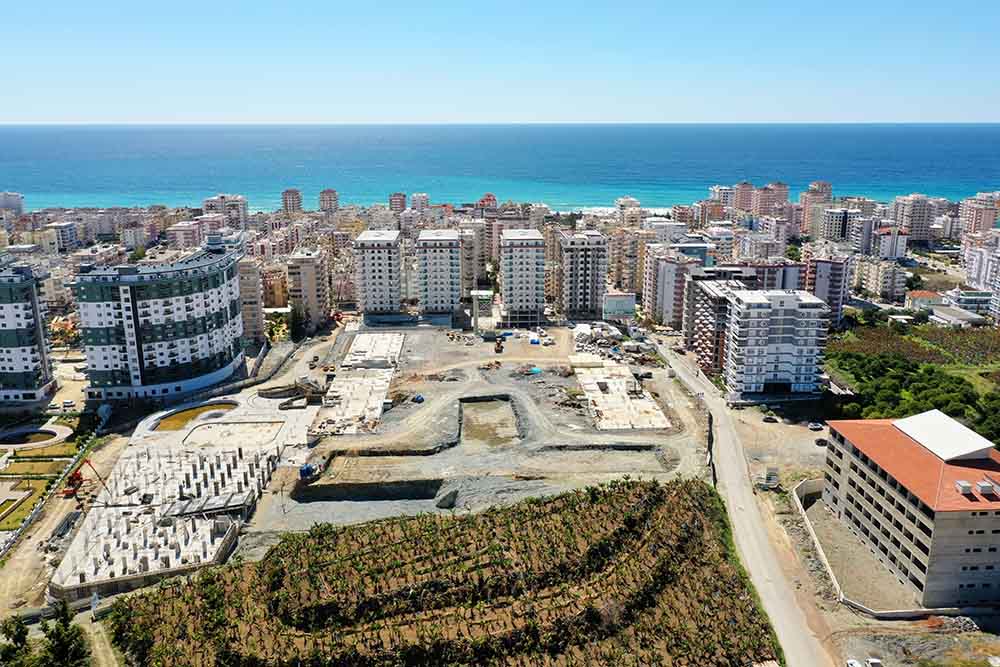
Coastal and central districts and provinces of Turkey are suitable for renting out, especially those that combine comfort, prosperity and a variety of leisure activities. For example, the Mahmutlar district of Alanya. It has everything you need for a comfortable holiday and a measured life: the sea, clean beaches, picturesque places, developed infrastructure and a large choice of housing. Many tourists choose this place for their holidays, so demand for housing here is always consistently high. Since 2024, renting to tourists for up to 100 days has required a permit from the Ministry of Culture and Tourism and the consent of all owners in the building, so this question is worth clarifying before buying.
5. Do you plan to live there yourself?
Property for living and investment must combine more parameters than just an apartment to rent out. First, you need to choose the district more carefully, paying attention to the availability of public transport, hospitals, schools and shops nearby, and so on. You will have to look for a home not only according to your own preferences but also with liquidity and demand in mind. If you need a residence permit based on property, the apartment must be with a TAPU price of $200,000 or more and be located in a neighborhood open to residence permits for foreigners.
How to reduce the risks of property investment
To do this, you need to:
- check the company's integrity, its ongoing and completed projects, read reviews about it and check its documentation (including its license);
- read the contract carefully before signing it;
- stick strictly to the payment plan;
- go to a real estate agent.
For property under construction, also check the building permit (a prepaid contract cannot be signed without it), the completion guarantee for projects of 30 or more apartments and the Land Registry statement for the plot.
"Before choosing a property, we advise deciding one thing: are you buying for rental income, for capital growth or for yourself? For rentals, the district and the 1+1 format matter; for growth, an early stage of construction and a reliable developer; for living, infrastructure and a residence permit. Once the goal is clear, the choice narrows down to two or three complexes," says a sales manager at Yekta Homes.
Who investing in Turkish property may not suit
- Those counting on making money quickly in euros. Adjusted for inflation, prices are currently falling, and a sale within 5 years is taxed.
- Those planning short-term rentals in any building. Without a ministry permit and the neighbors' consent, they are prohibited.
- Those buying with a mortgage. Rates of about 34–39% a year eat up the rental yield.
Each of these situations is visible in advance. The solution is to choose an investment format that matches your goal: long-term rental, buying at an early stage, or an apartment for yourself.
Frequently asked questions
What property in Turkey is best for investment?
For rentals, 1+1 apartments in resort areas such as Mahmutlar; for capital growth, new-builds at an early stage of construction.
What is the rental yield in Turkey?
On average 7.86% gross, and from 4.7% to 12.2% in Istanbul (Global Property Guide, third quarter of 2026).
How much housing do foreigners buy in Turkey?
21,534 properties in 2025, most of them in Istanbul and Antalya. 13,141 from January to August 2026.
Are property prices in Turkey rising?
In lira, yes, by 23% in the year to August 2026 (Central Bank of Turkey house price index). Adjusted for inflation, prices fell by 6.5%.
Help with buying property in Turkey
You will find more information about completed and ongoing projects in Turkey on the Yekta Homes website. To assess the company's work, the website features video reviews from buyers. You can get detailed advice on buying property from the developer from a manager.